

I always knew there was more. I just didn’t know how to access it.
There was always a sense that something was missing, although from the outside nothing seemed wrong.
For as long as I can remember, I had the feeling that life was happening on more than one level at once. There was what you could see: conversations, responsibilities, the structure of everyday life. And then there was something quieter underneath it. Something subtle, almost impossible to name, but unmistakably there.
As a child, I felt very close to that place. I would drift into it naturally, without effort, as if it were simply another way of being. But it wasn’t something that was recognised or encouraged. I was told I was too in my own world, too distracted, not present enough. And over time, like most children do, I learned to adjust.
I grew up in Russia, in an environment where life followed a fairly defined direction. Stability, achievement, material success. These were the markers that made sense to everyone around me. And while I understood their importance, I couldn’t fully connect to them. There was always a quiet resistance, not in rebellion, but in the sense that something essential was being overlooked.
Leaving for Australia was, in many ways, the first real step towards listening to that feeling. It gave me space to explore, to question, and to move beyond what had been familiar. I travelled often, not just to see new places, but because each place seemed to reveal a slightly different version of myself.
And yet, even as my life expanded, there was still a sense that what I was looking for remained just out of reach.
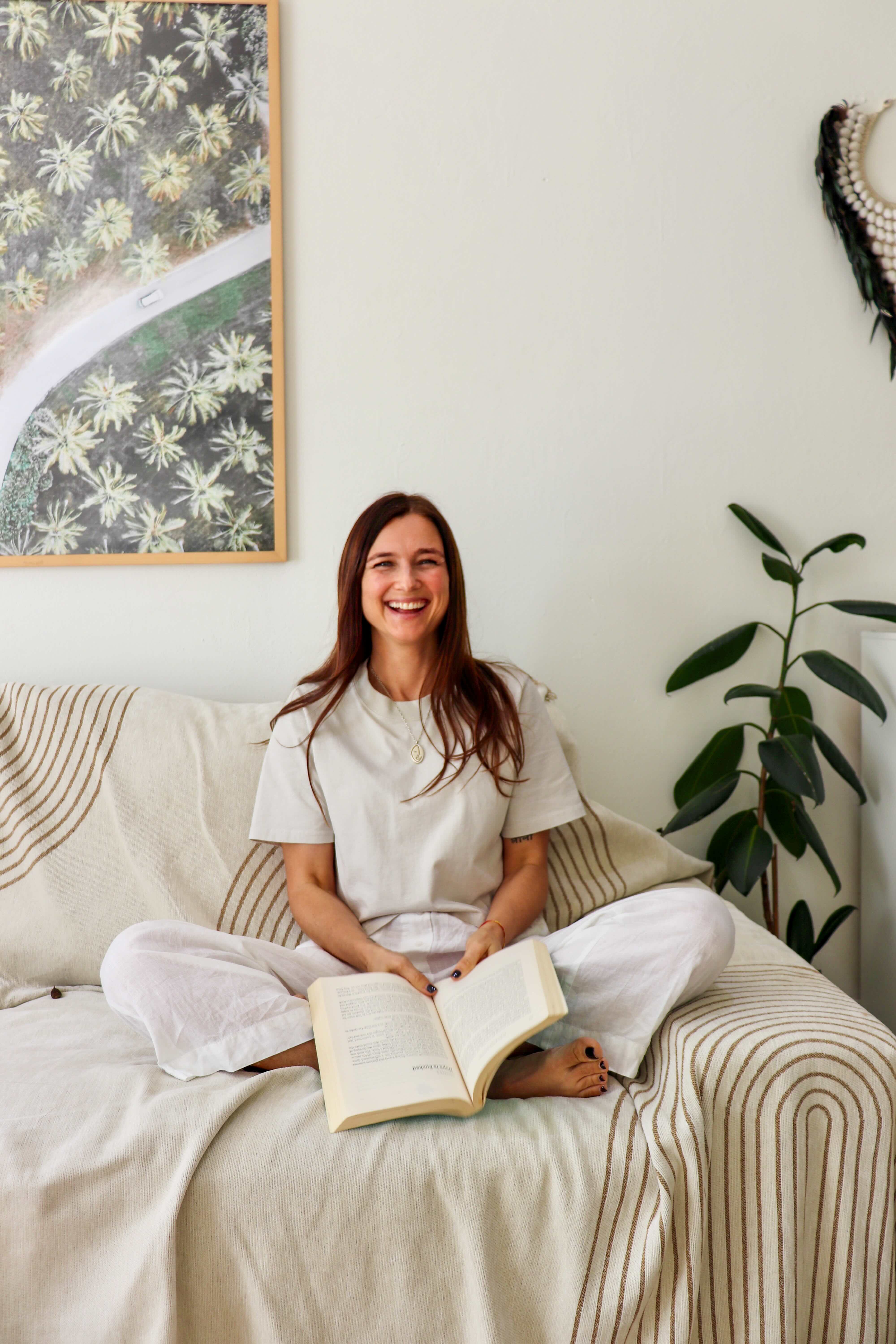
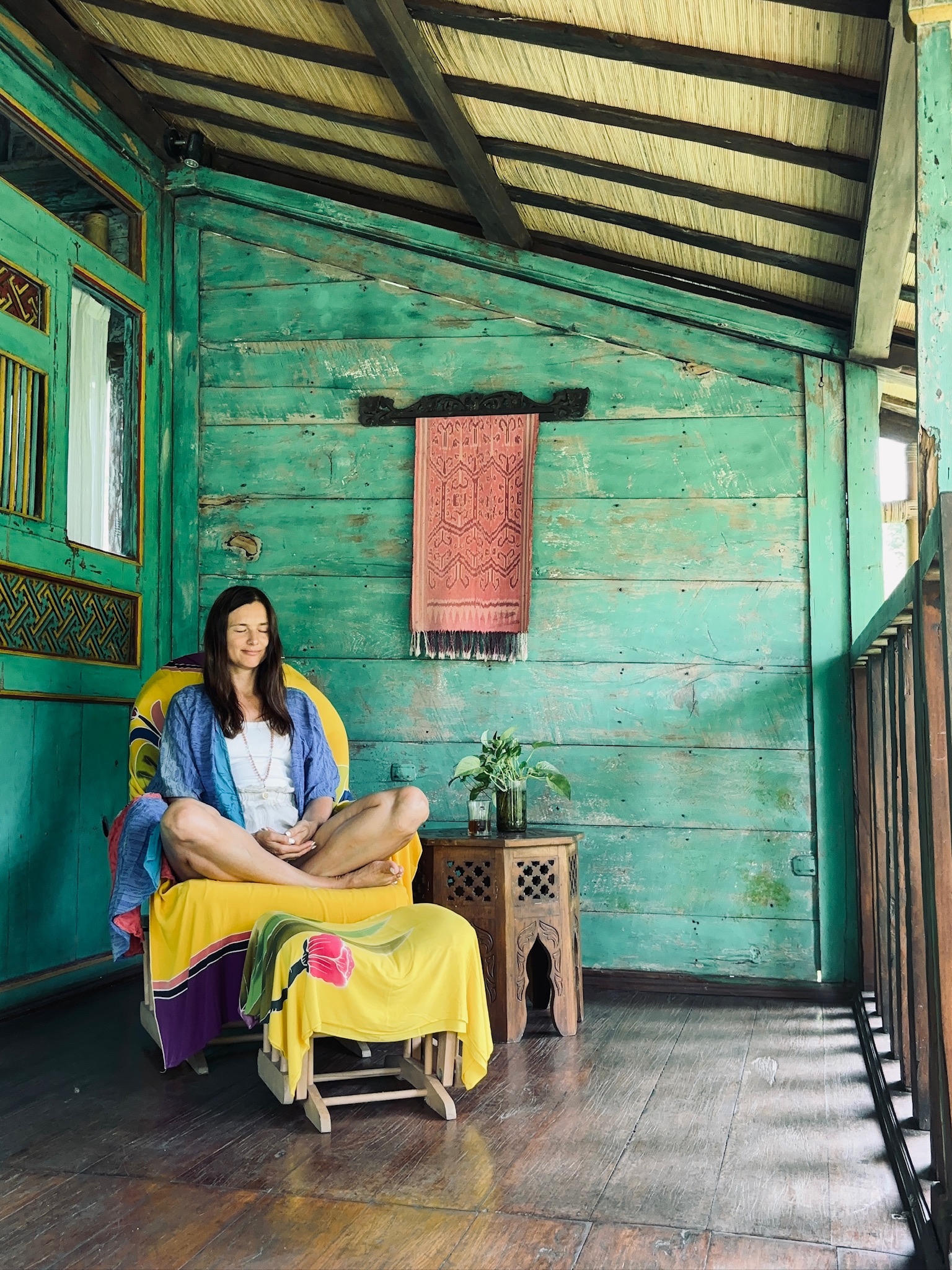
At the same time, my inner world was becoming increasingly difficult to navigate. Relationships, in particular, brought up a level of anxiety that I couldn’t fully make sense of. There was a constant undercurrent of tension, of needing reassurance, of overthinking what I felt and what others felt.
Then during COVID, that quiet background anxiety became something much more pronounced. I began waking up with a racing heart, already feeling on edge before the day had even started. There was a persistent sense of uncertainty in my body, as though I was bracing for something that hadn’t happened. It wasn’t something I could resolve through thinking or analysing. In fact, the more I tried to understand it, the more entangled it seemed to become.
That period made it clear that what I had been doing up until then, all the searching, the learning, the external exploration, had not yet touched the root of what I was experiencing.
Finding something that didn’t require me to try harder
Meditation had been part of my awareness for years. Like many people, I had tried different approaches. Guided practices, apps, even structured courses. I understood the intention behind them, but in practice they often felt like another thing to get right. There was always an element of effort: trying to focus, trying to quiet the mind, trying to stay present. And when the mind didn’t cooperate, which it rarely did, it felt as though I was failing at something that was supposed to help me.
So when I came across Vedic Meditation, it wasn’t something I had been actively searching for. But there was an immediate sense that this was different. Not because it promised something extraordinary, but because it didn’t ask me to struggle. The idea that the mind doesn’t need to be controlled, that it can be allowed to settle naturally, was both simple and unfamiliar.
What followed was not dramatic, but it was undeniable. Within a couple of weeks, the anxiety that had been a constant companion began to soften. There was a growing sense of ease in being myself, without the need to constantly monitor or adjust. And alongside that, there was a recognition. The subtle layer I had always sensed, the one that had felt distant and difficult to reach, was no longer something abstract. It was something I could experience directly.
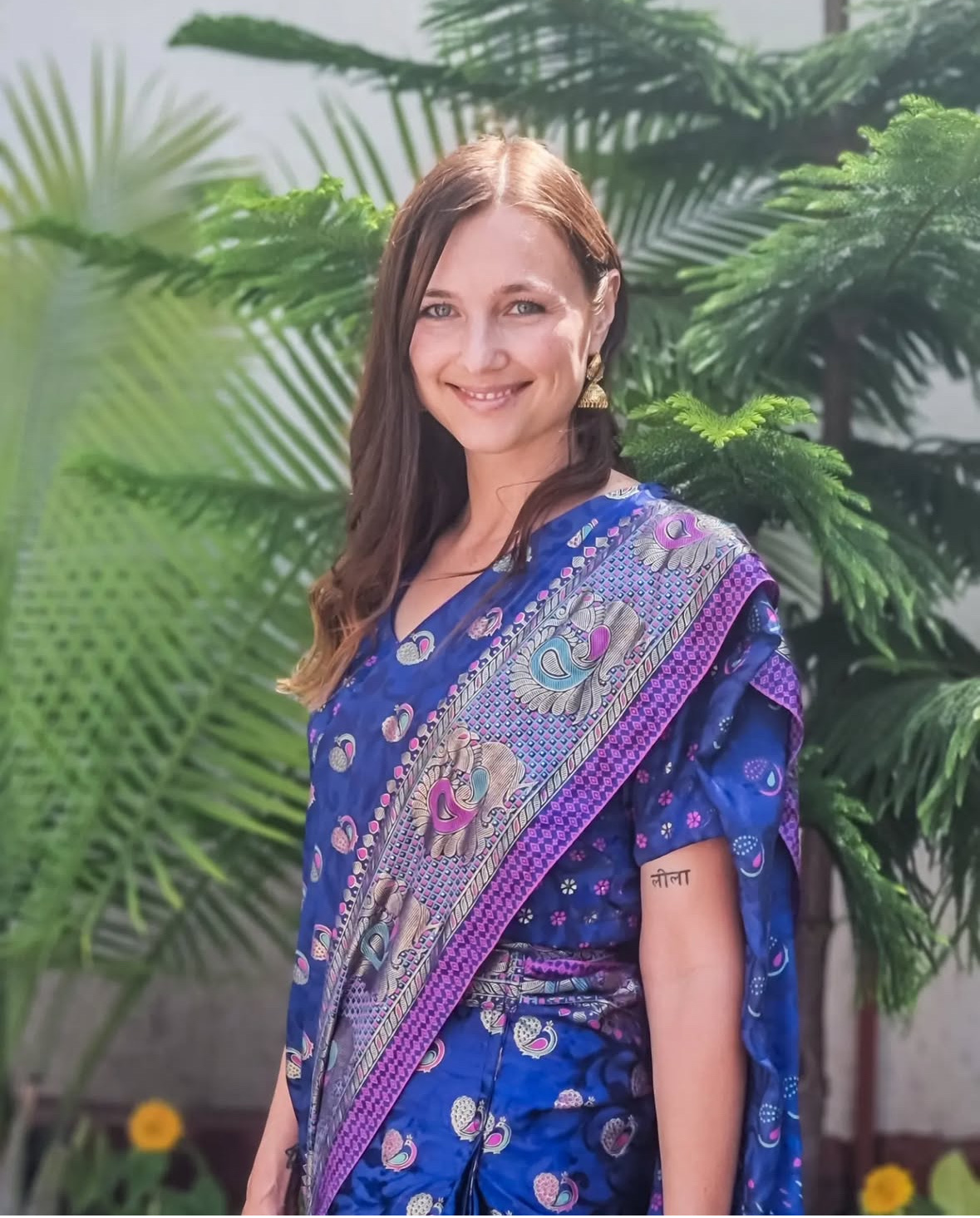
Training in the tradition
What began as a personal practice gradually became something I felt deeply drawn to understand more fully. Over the following years, I immersed myself in the study of Vedic knowledge and advanced meditation techniques. That path eventually led me to India.
I spent three months living in an ashram at the foothills of the Himalayas, near Rishikesh, where the Ganga flows with a kind of quiet power that is difficult to put into words. The environment itself invites a different rhythm. One that is slower, more inward, more attuned to what is actually present rather than what is anticipated. During that time, I meditated for up to 14 hours a day under the guidance of masters of this knowledge, and studied the Vedic texts and philosophy that form the foundation of this practice.
That period was not about adding something new, but about removing what was in the way. Layers of stress, patterns of effort, subtle tensions that are often unnoticed in everyday life. What remained was a deeper stability, and a greater capacity to hold and transmit the knowledge in a way that is relevant to modern life while staying true to its origins.
I teach within an ancient lineage that has been carefully preserved and passed down. My training is also supported by a background in education and qualifications in life coaching and NLP, which allows me to teach in a way that is both structurally grounded and deeply human.
Why I teach
This work is not something I chose in a conventional sense. It is something that unfolded naturally from my own experience. Having lived both in a state of constant underlying tension, and in a state where that tension is no longer the dominant note, the difference is not subtle.
Many people are functioning well on the outside while carrying a level of stress internally that they have come to accept as normal. Overthinking, difficulty resting, a sense of disconnection from themselves. These are often seen as inevitable parts of a full life. But they are not inherent.
When that stress begins to dissolve, something else becomes available. Not something new, but something more fundamental. A quieter mind. A more settled body. A way of experiencing life that is not filtered through constant effort.
Meditation, in this sense, is not a practice of becoming something else. It is a practice of returning to what has always been there. And once that becomes part of your direct experience, the way you move through life begins to change, quietly, but fundamentally.

My little teaching assistant
These days life moves between Potts Point and the Northern Beaches, between teaching and the quiet ordinariness of everything else. Honey came into my life not long after I returned from India, and has since appointed herself my unofficial teaching assistant. She has a gift for stillness that most meditators spend years working towards. And a way of settling into a room that, honestly, sets the tone better than anything I could say.